Parking lot striping in Little Rock, laid out stall by stall
Striping and restriping for property managers, businesses, churches, and cities in Little Rock and every town in Arkansas. Traffic flow, accessible parking, and the fire lane get planned before any paint goes down.
Call (501) 506-6799Available 24/7. Press 1 and you'll reach a person.
- Licensed and insured
- Family-owned
- 11 years in business
- Free written estimates
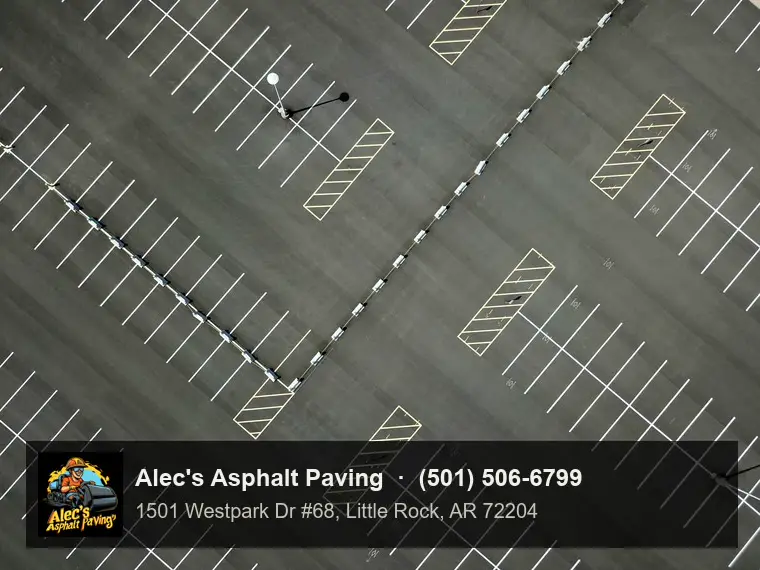
- The layout: stall width and length, set per lot layout and marked before any paint.
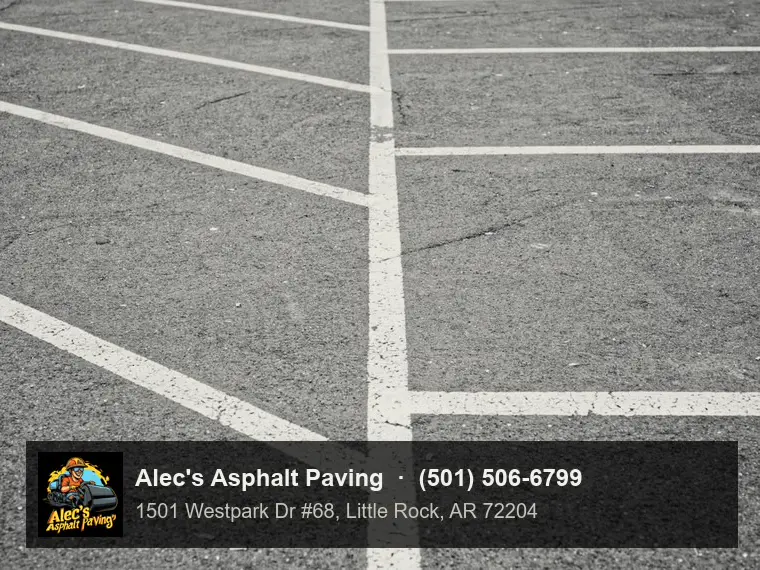
- Stall lines, painted mark to mark at an even spacing.
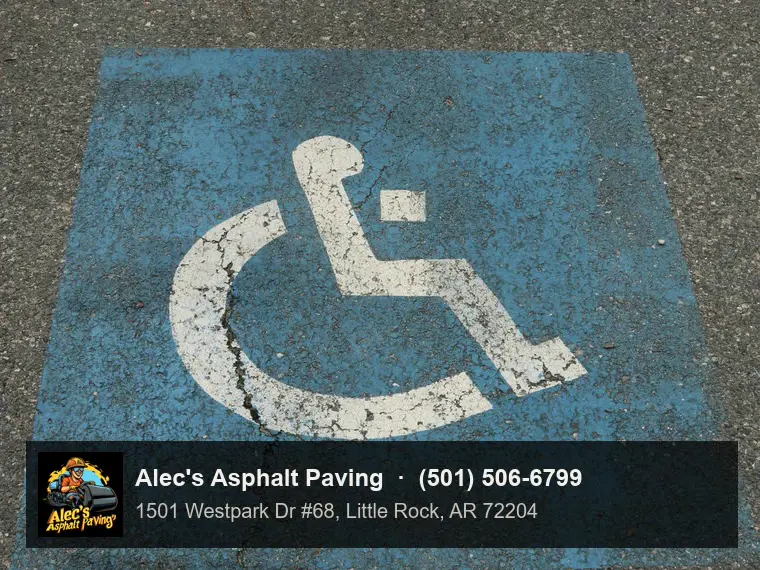
- An accessible stall and its hatched access aisle, beside the curb ramp.
- Directional arrows that match the way traffic moves through the lot.
- A fire-lane curb, painted and lettered the way your fire department asks.
When your parking lot needs new lines
Faded striping costs a commercial property more than its looks. When drivers can't make out the stall lines, they park by guesswork: crooked, across two spaces, or with a bumper hanging into the drive aisle. A row laid out for ten cars ends up holding eight.
The markings that matter most wear out first. Arrows and stop bars at the entrance take the heaviest tire traffic. The hatched aisle beside an accessible space fades into what looks like one more spot. Crosswalks lose the paint that keeps them visible to drivers, and that's a safety problem for pedestrians, not a looks problem. A fire lane without readable paint? It's just another lane.
It's time to restripe when:
- Patches have cut through the old markings. An asphalt repair leaves a black square where a line used to run.
- The lot has a new surface. A new overlay starts life with no lines at all.
- The way the lot gets used has changed: a new tenant, a new entrance, more delivery trucks, or a Sunday crowd that's outgrown the old rows.
- Someone has asked about it. A tenant, an insurance inspector, or the fire marshal has pointed at the fire lane or the accessible spaces.
Tell us about the lot, and we'll tell you what the property needs. (501) 506-6799
Repaint the same lines, or lay the lot out again?
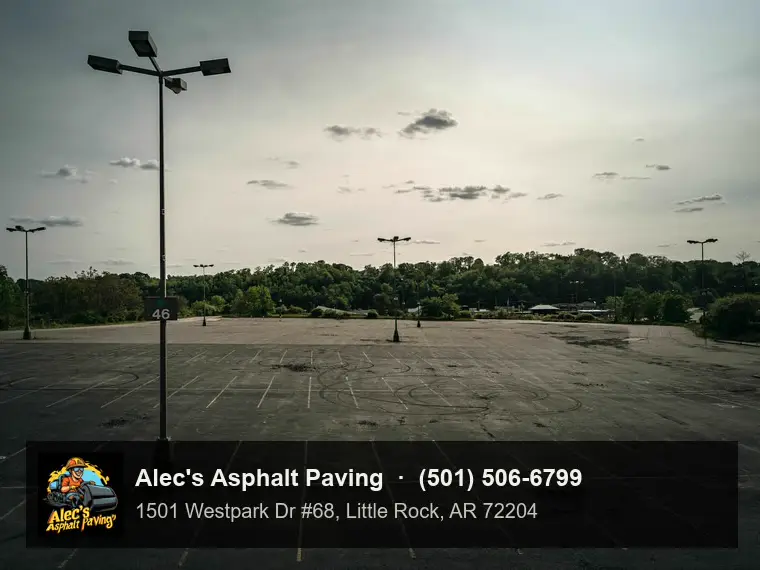
Most restriping traces the layout that's already on the pavement. If that layout works, tracing it is the quickest way to bring a lot back: the old lines are the guide, and fresh paint goes right over them.
Sometimes the old layout is the problem. Stalls drawn for sedans feel tight for today's pickups. Arrows point against the way people actually drive. The accessible spaces sit at the far end from the door everyone uses now. A new layout fixes those, and on some lots it fits more parking spaces into the same pavement.
A new layout gets settled on paper before anything touches the asphalt. Stall width and length, aisle widths, the angle of the stalls, which way traffic runs, where people walk to the door, and where the fire lane and the accessible spaces have to go are all decided first.
Then the old lines have to go. Painted over in black, they can wear back through as the cover coat wears, and for a few months you've got two layouts arguing with each other (people call them ghost lines). On a big change, a fresh sealcoat over the whole lot is often the cleaner reset, and it gives the new paint an even surface to grip.
Thinking about a new layout? Talk it through with us. (501) 506-6799
Accessible parking and fire lanes follow rules, not taste
Most of a striping plan is yours to decide. Two parts aren't. How many accessible spaces a lot needs, and where they go, comes from the 2010 ADA Standards for Accessible Design, written under the Americans with Disabilities Act. Where a fire lane runs and how it's marked comes from your local fire department.
The U.S. Department of Justice is plain about the timing. When a business or a state or local government restripes a lot, it has to provide the accessible parking the 2010 Standards require. So a restripe is the moment to get the count and the placement right.
What an accessible space needs
- Count
- Set by a table in the Standards from the lot's total number of spaces, and worked out separately for each lot on a site.
- Van spaces
- One of every six accessible spaces, rounded up, has to be van-accessible, so there's always at least one.
- Location
- On the shortest accessible route to an accessible entrance.
- Level ground
- The space and its aisle have to be close to level, so the grade decides where they can go as much as the door does.
- Access aisle
- Marked so nobody parks in it. Two spaces can share one.
- Sign
- The International Symbol of Accessibility at each space, with "van accessible" added at van spaces. A site with four or fewer spaces in total can skip the sign, but it still needs one van-accessible space.
Fire lanes are the fire department's call
The usual marks are a curb painted along the length of the lane and NO PARKING FIRE LANE lettered on the curb or the pavement, sometimes with signs as well. What your property needs is up to your fire marshal, so ask what they want, and the lane gets painted to match.
Ask about the accessible spaces and fire lane on your lot when you call. (501) 506-6799
What happens on striping day
Steps one to five match the numbered marks on the plan at the top of this page.
The pavement is cleaned and laid out
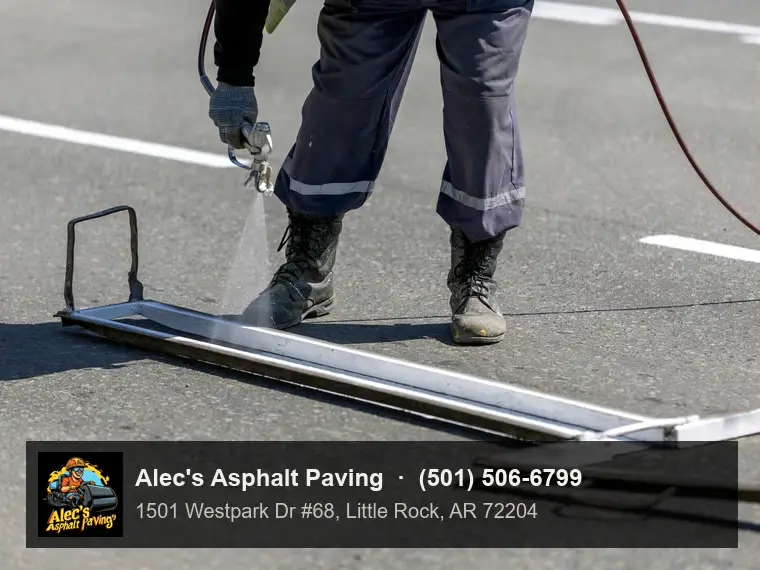
Paint won't hold on dust, grit, or oil, so the surface gets blown clean first, and an oil-soaked stall may need pressure washing. Then the ends of every line are measured and marked, so stall widths and lengths match the plan instead of drifting down the row.
Stall lines
Each line runs from mark to mark, straight and at an even width. Same spacing, every stall.
Accessible stalls and their aisles
These go where the plan puts them. The aisle is outlined and hatched so it reads as no-parking at a glance, and the stall gets its wheelchair symbol.
Arrows, stop bars, and crosswalks
Stencils come next. An arrow only helps if it agrees with the layout, so each one is placed from the plan, not from wherever the old one used to be.
Curbs and fire lanes
Curb faces get painted along the fire lane and any other no-parking zone, and the lettering goes where your fire department asked for it.
A final count
Before the cones come up, the finished lot is checked against the plan, row by row.
What to ask about the paint
- Paint type
- Water-based traffic paint is the usual material for lot lines. Ask which one your quote is for.
- Thermoplastic
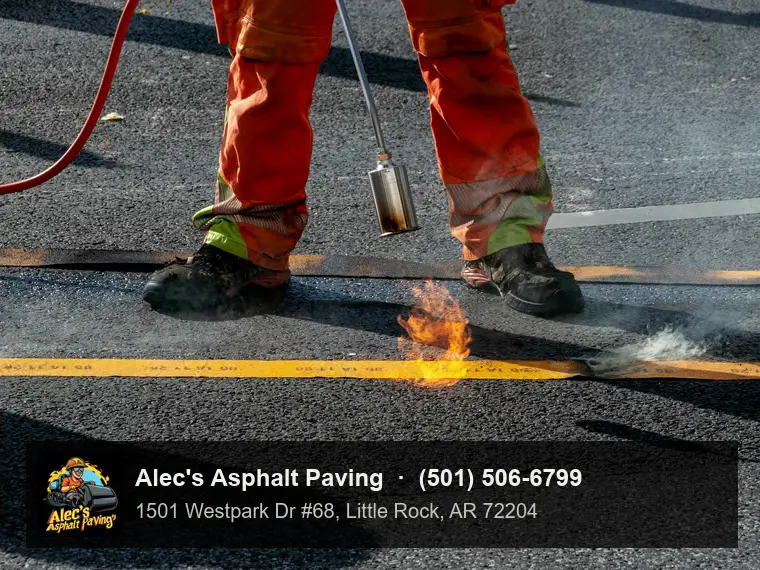
- A road marking material melted onto the pavement with heat. It's more durable than paint, so it's usually saved for the arrows, crosswalks, and stop bars that take the most wear.
- Reflective beads
- Glass beads dropped into the wet paint so lines shine back in headlights. Worth asking about for fire lanes and lots used after dark.
Ask us which paint fits your lot. (501) 506-6799
Parking lot striping prices in Arkansas
What striping generally costs in Arkansas: a market range, not a quote, so you can tell whether an estimate is in the right neighborhood.
| Work | General range |
|---|---|
| Line striping | $4–$15 per stall |
| ADA-accessible stall | $30–$90 per stall |
| Small-job minimum | $300–$600 |
The final price depends on the job: the condition of the pavement, and the things listed below. Your written estimate is free. (501) 506-6799
What changes the price
- Stall count. Striping is priced by the stall, so the size of the lot drives most of the cost.
- Accessible stalls. The hatched aisle and the symbol take more paint and more time than a plain stall.
- A new layout. Tracing what's there is the affordable option. Measuring a lot from scratch and blacking out the old lines is more work.
- Everything besides the stalls. Arrows, crosswalks, stop bars, lettering, numbered or reserved stalls, and painted curbs.
- Thermoplastic. The material costs more than paint and takes longer to put down.
A certificate of insurance is available on request. (501) 506-6799
What customers say about the work
-
★★★★★
We needed our restaurant parking lot restriped and the accessible spaces re-marked. Alec quoted it over the phone, sent a crew two days later, and they finished before our dinner rush. Clean lines, fair price.
Rachel V.
-
★★★★★
We hired Alec's Asphalt for our retail office parking lot in NLR. They handled the full paving job as well as the ADA-compliant striping. Very professional crew, stayed strictly on budget, and finished before our Monday opening.
Sarah W.
-
★★★★★
We own a small strip center in west Little Rock. They sealcoated the lot, restriped everything, and re-marked the handicap spaces over a weekend, so our tenants' customers were never affected. It looks sharp.
Gary N.
Parking lot striping anywhere in Arkansas
Our yard is in Little Rock. Here are a few of the towns we cover:
Every other town in the state is covered too, from the Ozarks down to the Delta. See all 109 towns
Weather moves a striping date more than distance does. Paint needs dry pavement and mild air to grip, so rain on the day, or a cold snap, means waiting for a better one.
The work that goes under the lines
Sealcoating
Sun and water protection for pavement that's still sound.
Crack Sealing and Filling
Open cracks filled so rain can't reach the base.
Asphalt Repair
Broken and sunken spots cut out and rebuilt.
Asphalt Maintenance
Crack sealing, patching, sealcoat, and restriping on one schedule.
Parking Lots
New lots and full replacements, with striping as the last step.
Tell us where the lot is. (501) 506-6799
Questions about parking lot striping
How much does parking lot striping cost?
It's priced per stall, with accessible stalls and small jobs on their own lines. The Arkansas ranges are in the price table above, and your own number comes on a free written estimate.
How long does parking lot striping last?
There's no honest single number. The paint, the traffic, and the sun decide it. A busy retail lot wears its lines down faster than a church lot that fills once a week, and lines in full sun fade faster than shaded ones.
Should I sealcoat before I restripe?
If the pavement's due for sealcoating, yes: seal first, stripe last. Stripe first and you're paying for lines the sealcoat buries a few months later.
Do we have to close the whole lot?
Usually not. A restripe can run in sections, with one area coned off while the rest stays open. Tell us when your lot is busiest, and the work can be split around it.
How soon can cars park on new lines?
Once the paint is dry, and the weather decides how long that takes. Warm, dry air speeds it up. Humid or cool air slows it down. The cones stay up until then, because a tire on wet paint tracks it across the lot.
What color should parking lot lines be?
White or yellow both work for stall lines, and it's mostly your call. The ADA Standards don't set a color for accessible spaces or their aisles and leave that to state and local rules, though blue is common.
Get lines drivers can see again.
Give us a rough stall count, the town, and whether you're keeping the layout or changing it. We'll set up your free written estimate from there.
Call (501) 506-6799Available 24/7. Press 1 and you'll reach a person.
Ask about the warranty on your job when you call. It depends on the work.