Asphalt maintenance in Little Rock, before the lot fails
Patching, crack sealing, sealcoating, and restriping for businesses, churches, property managers, and cities in Little Rock and every town in Arkansas. The work goes in the order that keeps water out of the base.
Call (501) 506-6799Available 24/7. Press 1 and you'll reach a person.
- Licensed and insured
- Family-owned
- 11 years in business
- Free written estimates
- Failed spots cut out square and patched with new hot mix.
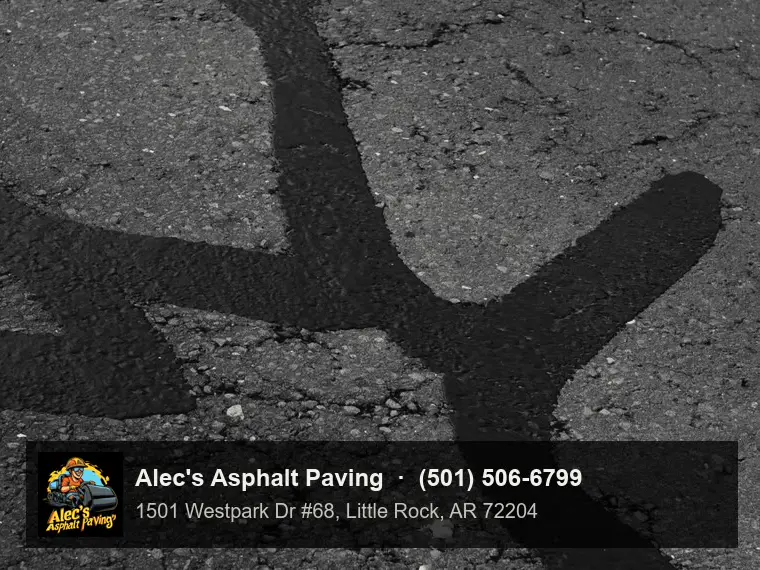
- The cracks that are left, filled so rain can't reach the base.
- Sealcoat over the whole surface. A busy lot can be sealed one section at a time.
- Stalls, arrows, and accessible parking restriped once the sealer is dry.
How a parking lot wears out, and where upkeep steps in
Even a lot that was paved right doesn't fail overnight. It wears out in a chain, and every link costs more to fix than the one before it.
It starts on top. Sun and summer heat (July and August highs average about 92°F around Little Rock, Arkansas) dry out the binder, the sticky petroleum that holds the stone together. The surface turns brittle, shrinks, and cracks. Then the water gets in. The middle of the state gets about 50 inches of rain a year, and every open crack sends some of it down into the stone base, where it softens the ground that carries the weight. Freezing nights and loaded trucks do the rest.
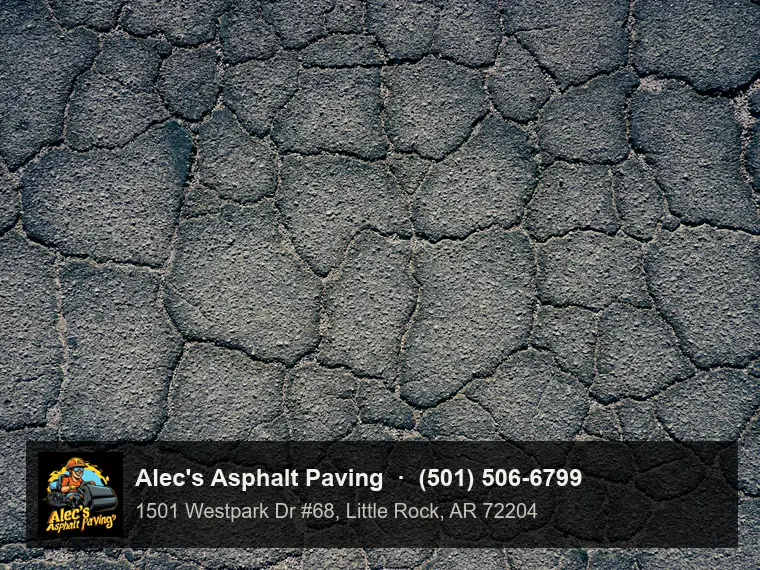
The cracks spread into a web, the web breaks into potholes, and the bill heads toward new asphalt paving.
Regular maintenance breaks the chain at the cheap end, and that's the whole case for it. Timing matters more than any single coat. A long-lasting lot is usually one that was looked after early, while the base under it was still sound.
Seeing cracks or potholes already? Tell us where they are. (501) 506-6799
Parking lot maintenance, in the order that works
The four steps match the numbers on the drawing at the top of the page. Done out of order, each job wastes some of the one before it.
Patch the failed spots first
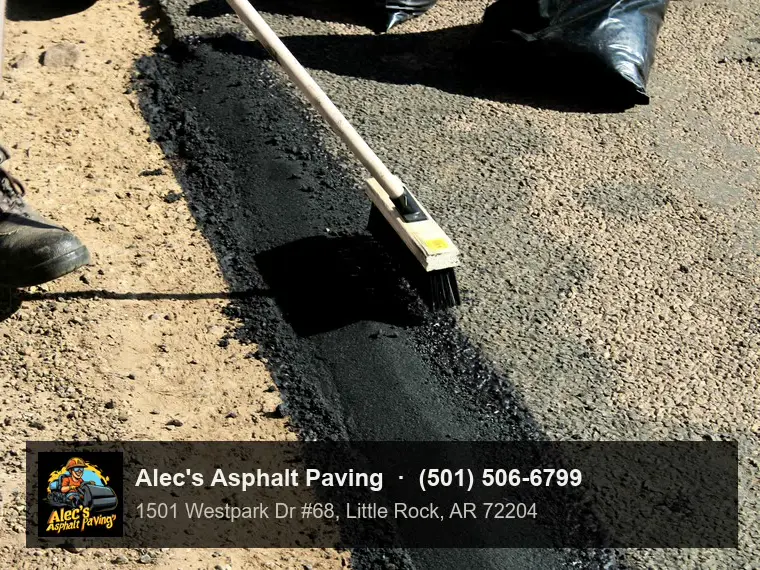
Potholes and patches of web cracking are cut out square, down to firm material, and rebuilt with new hot mix asphalt rolled flush with the lot. Patching goes first because it removes pavement. Filling cracks in a spot that's about to be cut out is money thrown away. Asphalt repair
Fill the cracks that are left
Every remaining crack is cleaned out and filled, along with the seams where new patches meet the old asphalt. After that, rain runs across the lot instead of down into it. Crack sealing and filling
Seal the whole surface
Once the lot is swept and dry, the seal coating goes over the entire asphalt surface. It takes the sun and the rain so the binder underneath doesn't have to. It's the only one of the four jobs that touches every square foot. Sealcoating
Stripe it last
Stalls, arrows, crosswalks, the fire lane, and the accessible spaces go back on after the sealer has dried hard. Paint laid before sealing just gets covered, and paint on wet sealer peels. Line striping
Ask which of the four your lot needs this year. (501) 506-6799
What to look for on a walk around your lot
Go the morning after a hard rain, when the water shows you what the asphalt pavement is hiding.
- Cracks you could slide a coin into. Those are the ones to fill. Left open, they turn into the next thing on this list.
- A web of small cracks, or a pothole. The base under that spot has already given way, so it's a patch, not a crack-filling job.
- Water still standing hours after the storm. The surface has sunk or the grade is off, and the water sitting there finds every crack. Mention it when you call; it may need more than a patch.
- A gray, rough surface with loose stone on top. The binder is drying out. That's the moment sealcoating earns its keep.
- Lines you have to squint to see. Especially the accessible stalls, the fire lane, and the crosswalks, the markings with rules behind them.
Found a few of these? Describe them on the phone. (501) 506-6799
What asphalt maintenance costs in Arkansas
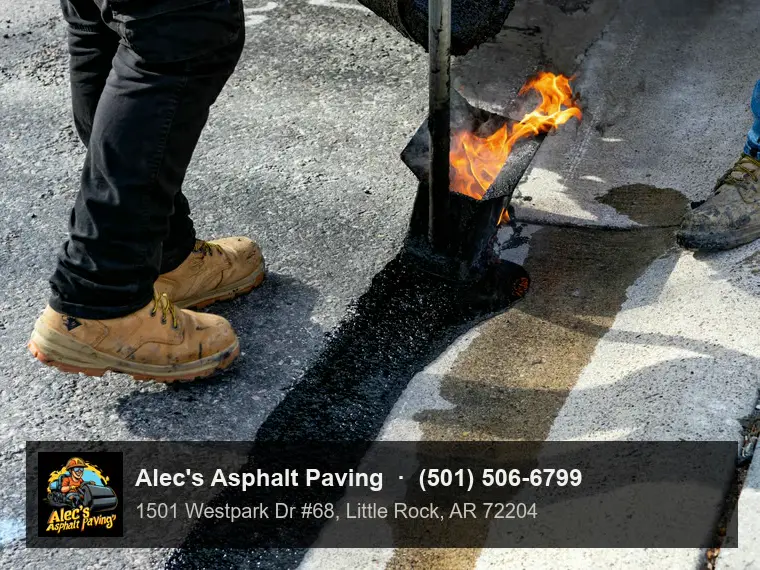
These are general Arkansas market ranges for the four jobs, not a quote. Each one is priced in its own unit, so a maintenance estimate can be checked line by line: ask any asphalt contractor to put the measurement next to every price.
| Work | General range |
|---|---|
| Repair and patching | $3–$15 per sq ft Most single potholes $150–$600 |
| Crack filling | $1–$5 per linear ft |
| Sealcoating | $0.20–$0.75 per sq ft |
| Line striping | $4–$15 per stall Accessible (ADA) stall $30–$90 Small-job minimum $300–$600 |
The final price depends on the job: its size, access, the condition of what's there, and how much of the lot has to be patched first. Your written estimate is free. (501) 506-6799
What customers say about the work
-
★★★★★
I manage an apartment community in Bryant. They patched the failed spots, sealed, and restriped our lot in phases, so residents always had somewhere to park. The accessible spaces and striping were done right. I'll be sending Alec every referral I can.
Linda G.
-
★★★★★
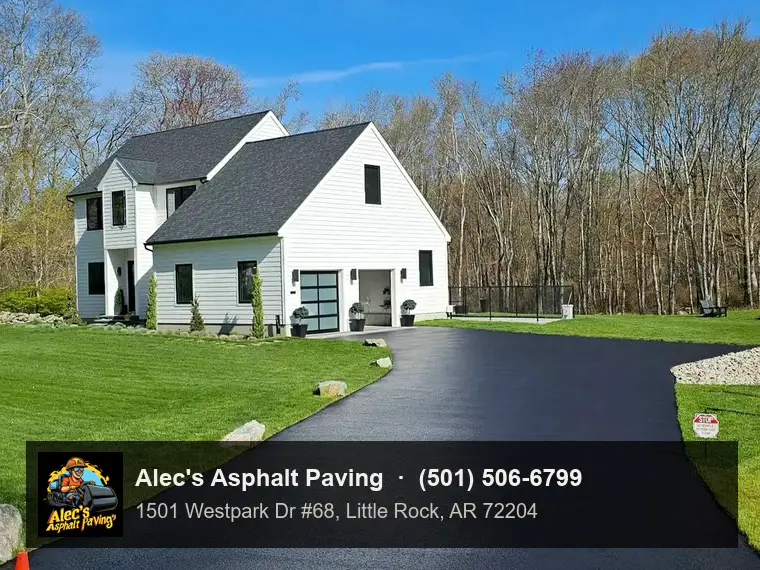
Alec's Asphalt did a wonderful job filling potholes, sealcoating, and restriping our church parking lot. They were respectful, fast, and offered a very affordable solution that fit our congregation's budget.
Pastor John D.
-
★★★★★
Trucks had torn up the loading area of our warehouse lot. It took a little while to get on Alec's schedule because they were busy, but the quote was clear and the repair was done fast and holds up under heavy trucks. Worth the wait.
Anthony J.
Maintenance services for businesses, churches, and cities
A property manager with five sites, a church whose lot fills twice a week, a shop owner, a general contractor handing over a new building, a city public works crew: sooner or later, each needs the same four jobs, planned around a lot that can't simply close.
So tell us when your lot can't be touched: Sunday morning, the Friday lunch rush, the school pickup line. Sealer and paint both need the lot empty while they dry, so settle the timing before the job is booked.
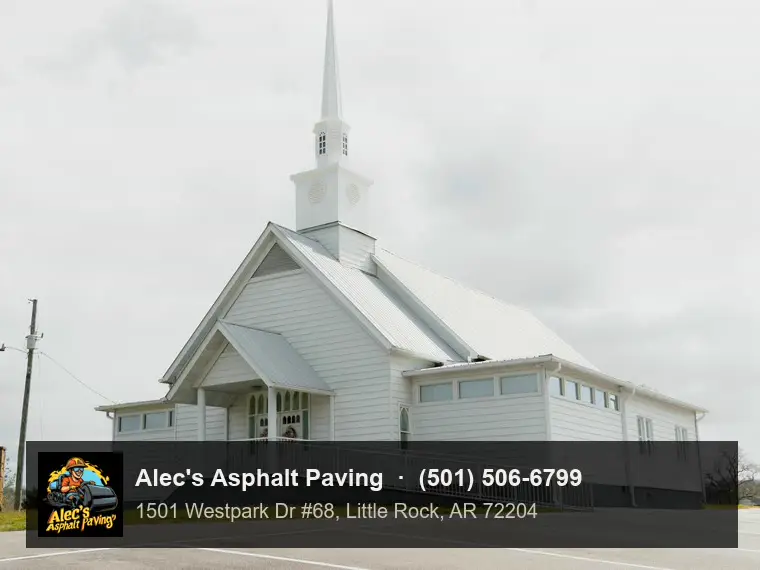
The order is the same for residential and commercial clients, whether it's a church lot or a long asphalt driveway out in the county. A certificate of insurance is available on request.
Looking after more than one lot? Ask about all of them in one call. (501) 506-6799
The asphalt services in a maintenance plan, and what comes after
Asphalt Repair
A pothole or a crumbling edge that can't wait for the rest of the lot's upkeep.
Crack Sealing and Filling
Crack work by itself, for a lot that's sound but starting to open up.
Sealcoating
Just the seal, on a lot whose cracks and patches are already taken care of.
Line Striping
Faded lines traced back over, or the whole lot laid out again.
Overlay and Resurfacing
A new layer for a lot that's worn on top but still sound underneath.
Parking Lots
Parking lot paving, new or rebuilt, once the base has failed across most of it.
The upkeep calendar in Little Rock and across Arkansas
Climate sets the calendar. Around Little Rock the normal freeze window runs from about November 10 to March 21 (NOAA's 1991–2020 normals), so the mild weeks of fall are the time to patch what's failed and close the cracks, before winter water can use them.
Potholes that open over the winter get patched once the ground dries out in spring, and the cracks around them filled after. Sealer and paint both want warm, dry days, which makes late spring through early fall the season for sealing and striping. The Ozarks freeze earlier, often by the last week of October, and the Delta's long, hot summers are hard on a lot's surface.
We're based in Little Rock, AR, and we work in every town in Arkansas. These are some of them:
The rest are on the list of all 109 towns.
Lot somewhere else in the state? Call and ask. (501) 506-6799
Questions about asphalt maintenance
How much does parking lot maintenance cost?
It depends on how many of the four jobs your lot needs and how big it is. The price table above gives Arkansas ranges for each one. Your free written estimate prices your lot.
Should a parking lot or driveway be sealed every year?
Usually not. Sealer is a thin coat, and stacking fresh coats on one that hasn't worn through can leave a surface that cracks and peels. Seal when the old coat has worn thin, not because another year has gone by.
Why do some people say sealcoating is pointless?
Because on a lot that's already failing underneath, it is. Sealer shields a sound surface from sun and water. It can't bridge an open crack or firm up a soft base, so sealing over potholes and web cracking only makes a bad lot look better for a season.
What spills damage an asphalt lot?
Gasoline, motor oil, diesel, and hydraulic fluid. The binder in asphalt concrete is a petroleum product, so petroleum dissolves it. A steady drip under a parked car or a delivery truck leaves a soft, crumbly spot. Soak up spills early. A spot that's already gone soft has to be cut out and patched before the lot is sealed.
What happens if it rains right after sealcoating?
Rain on sealer that hasn't hardened can wash some of it away. You'd see streaks, or a gray film running toward the drains. Sealing is planned around a dry forecast for exactly that reason; if a storm comes through early anyway, ask about touching up the washed areas.
Can maintenance save a lot that's already breaking up?
Part of it, often. When the failed areas are a small share of the lot, they're cut out and patched and the rest gets the usual upkeep. When web cracking and potholes cover most of it, the base under the whole lot has failed, and maintenance money would be wasted. That lot needs rebuilding.
Tell us about your lot.
How big it is, how old it is, and what you're seeing: cracks, potholes, standing water, faded lines. We'll set up a free written estimate for the jobs it actually needs.
Call (501) 506-6799Available 24/7. Press 1 and you'll reach a person.
Ask about the warranty on your job when you call. It depends on the work.