Sealcoating in Little Rock, with the cracks filled first
Asphalt sealcoating for driveways and parking lots in Little Rock and every town in Arkansas. If your pavement needs more than a coat of sealer, you'll hear that before you pay for one.
Call (501) 506-6799Available 24/7. Press 1 and you'll reach a person.
- Licensed and insured
- Family-owned
- 11 years in business
- Free written estimates
- Swept clean, so the coat bonds to the asphalt and not to dust.
- Broken spots cut out and patched.
- Cracks cleaned out and filled before the coat goes over them.
- The seal coat: a thin layer of its own that takes the sun and rain so the asphalt under it doesn't.
Sun and water wear asphalt out from the top down
Sealer goes on as a thin coat over the top of your driveway or parking lot, so the sun and rain wear on the coat instead of on the pavement. That matters because of what asphalt is: crushed stone held together by a black binder (engineers call the mix asphalt concrete), and the binder is the part that weathers.
Arkansas weather is hard on that binder. Around Little Rock, July and August highs average about 92°F, and the UV rays that come with them dry the surface out a little more every summer. Dry binder shrinks and loosens its grip on the stone. First the black fades to gray. Then the surface turns rough and gritty, fine cracks open, and the rain, roughly 50 inches a year, has somewhere to go.
The coat also takes the drips. Oil and gas soften asphalt where cars sit, and a coat on top gives them something to land on besides the asphalt. It puts the black back, too, along with the curb appeal that goes with it. That's a bonus, though. Not the reason.
What sealer won't do is hold anything up. It adds no strength and doesn't level a low spot. It's a coating, not a repair.
Oil spots where the cars park? Mention them when you call. (501) 506-6799
Seal it while it's worn, not once it's broken
When you seal matters as much as whether you seal. Too early, and you've coated asphalt that wasn't ready. Too late, and you've paid to cover damage that needed a repair. The drawing below shows the three stages, and only the middle one wants sealer.
Brand-new asphalt: not yet
New asphalt needs time to cure before anything goes over it, and how long depends on the mix and the weather. Ask whoever paved it, or ask us when you call. It's one of the few times in this trade when waiting is the right move.
Worn but sound: seal it
This is the stage sealer is for. The surface has faded, it feels rough underfoot, and there may be a few hairline cracks, but it's flat, it drains, and nothing is breaking up. Fill the cracks and seal it now, while there's still sound asphalt under there to protect.
Broken: repair it first
Potholes, ruts where the tires run, cracking that's joined up into little blocks, or a puddle that forms in the same place every time it rains all point to trouble under the surface. Sealer over that only changes how it looks. The fix is a repair or an overlay, and the coat can go on after.
Which stage is yours? Tell us what you're seeing. (501) 506-6799
Cleaned, patched, filled, then sealed
Steps 1 to 4 match the numbers on the drawing at the top of the page. Most of the sealcoating process happens before any sealer comes out, and it's the part you'd never see afterward.
Swept and blown clean
Dirt, leaves, loose grit, and the grass creeping in from the edges all come off first. Oil stains need attention too, since sealer won't hold on a greasy spot.
Broken spots patched
Anything crumbling or holed is cut out and patched before the cracks get touched, so nobody fills a crack in pavement that's about to come out. Potholes and patching have a page of their own: asphalt repair.
Cracks cleaned out and filled
Then each crack gets blown out and filled with crack sealant so water can't work its way down into it. That's why sealcoating and crack filling usually come as a pair. More on crack filling
The coat goes on
Sealer is spread in an even coat over the whole surface, edge to edge. It stains concrete, brick, and paint, so the edges are where careful work shows.
It cures, and it's yours again
Keep cars, bikes, and feet off it until it's cured, which depends on the sun and the heat that day. On a lot, the stall lines and arrows go back on afterward with parking lot striping, since the coat covers the old paint.
Six things to ask before anyone seals it
- Which cracks get filled, and with what. All of them, or only the wide ones?
- What gets patched first, if anything, and where it is.
- How many coats, and whether the busiest lanes or the apron at the street get extra.
- What gets covered or kept clear: the garage slab, walks, brick, fences, plants, and your neighbor's drive. And who cleans up any overspray.
- Who you call if something isn't right after the crew leaves.
- On a parking lot, the restriping, including the ADA-accessible stalls.
Every one of those is a fair question to put to us, too. (501) 506-6799
Sealcoating prices in Arkansas, by the square foot
Here's what sealing generally costs in Arkansas. It's a market range, not a quote, so the number on your written estimate won't come out of nowhere.
| Work | General range |
|---|---|
| Sealcoating | $0.20–$0.75 per sq ft |
The final price depends on the job: its size, the condition of what's there, how much patching and crack filling comes first, and how easy it is to reach. Your written estimate is free. (501) 506-6799
What moves the price up or down
- Size. Small jobs cost more per square foot, because getting a crew and its equipment to you costs about the same for a short drive as for a big lot.
- Condition. Old, dry, porous asphalt surfaces soak up more sealer than newer ones do.
- Coats. A second coat means more material and more time on site.
What customers say about the work
-
★★★★★
Had our driveway and the parking pad behind the house sealcoated and it looks brand new. The guys set out cones so the kids and the dog stayed off, and told me exactly when I could drive on it. Polite, on time, and they cleaned up when they left.
Marcus T.
-
★★★★★
We own a small strip center in west Little Rock. They sealcoated the lot, restriped everything, and re-marked the handicap spaces over a weekend, so our tenants' customers were never affected. It looks sharp.
Gary N.
-
★★★★★
Alec's Asphalt did a wonderful job filling potholes, sealcoating, and restriping our church parking lot. They were respectful, fast, and offered a very affordable solution that fit our congregation's budget.
Pastor John D.
Parking lots for churches, businesses, and property managers
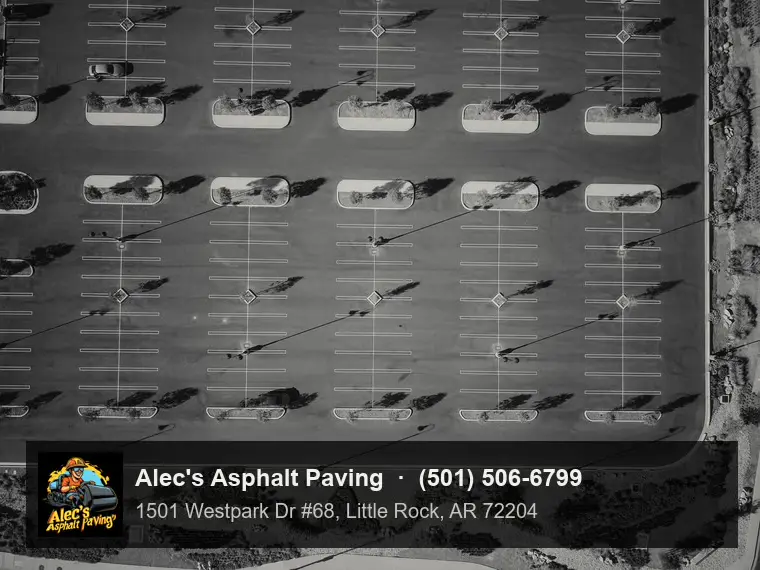
Parking lots take more vehicles, tighter turns, and more oil than any home driveway, so they wear faster and show it sooner. Sealing is the part of parking lot maintenance that protects the surface itself, after the cracks are filled and before the lines go back on.
That's why property owners and managers keep a lot on a pavement maintenance program instead of waiting for it to fail, with routine sealcoating as one line in it. The maintenance page lays out the whole cycle for commercial properties.
Churches, small businesses, apartment complexes, and city and county lots all share one problem on sealing day: people still need to park. Ask about doing the lot in sections, so part of it stays open while the rest cures.
A certificate of insurance is available on request.
Managing a lot? Tell us its size and what it's used for. (501) 506-6799
What comes before, after, or instead of sealing
Crack Sealing and Filling
Cracks cleaned out and filled, the step that comes before any sealer.
Asphalt Repair
Potholes and crumbling spots cut out and patched.
Line Striping
Stall lines, fire lanes, and ADA marking, put back after sealing.
Asphalt Maintenance
The upkeep cycle that keeps a busy lot from wearing out early.
Overlay and Resurfacing
A new layer for pavement that's past sealing but still has a sound base.
Asphalt Paving
New asphalt from the ground up, for when it's time to pave again.
Throughout Little Rock and across Arkansas
Our yard is in Little Rock. Here are a few of the towns we cover:
- Bryant
- Hot Springs
- Lonoke
- Malvern
- Mayflower
- North Little Rock
- Pine Bluff
- Sheridan
The rest of the state is covered too. See all 109 towns
Not on the list? Every town in Arkansas is on ours. (501) 506-6799
Questions people ask before sealing
How much does it cost to sealcoat a driveway?
It's priced by the square foot, and the general Arkansas range is in the price table above. Your own number comes on a free written estimate.
Does sealcoating fill cracks?
No. Sealer is far too thin to close a crack. Leave one open under a fresh coat and it keeps taking in water, then shows back through before long.
How long does sealcoating last?
Until traffic and sun wear through it, and that varies from one surface to the next. Watch the wheel paths and the spots where cars turn. They wear through first, and when they do, it's due again. Sealing more often than that just stacks coat on coat, and a thick buildup can crack and peel on its own.
What happens if it rains right after sealing?
Rain that arrives before the sealer cures can wash some of it off or leave it streaked. That's why sealing waits for a dry forecast, and why a job can move a day when rain turns up.
Is October too late to seal a driveway in Arkansas?
Around Little Rock and in the south, usually not. In the Ozarks, it's getting late. Sealer needs warm, dry days to cure. Across the middle of the state, the south, and the Delta, the first freeze usually holds off until early to mid-November (about November 10 at Little Rock). Up in the Ozarks, the first freeze often lands by the last week of October (NOAA 1991–2020 normals).
Can you seal coat a gravel driveway?
No. Sealcoat goes on asphalt, and loose gravel gives it nothing to hold. If you're done grading ruts, you can pave it with hot mix or turn it into tar and chip, a sprayed surface with stone rolled in that's common on long country drives. The driveways and tar and chip pages cover both.
Can I seal coat my driveway myself?
You can, and plenty of people do. Sealer is sold by the pail, and the steps are the same ones listed above. What changes is scale: on a long drive or any lot, cleaning, filling, and spreading an even coat by hand makes for a long, hot day, and you're the one keeping everybody off it afterward.
Seal it before another summer gets to it.
Tell us roughly how big the surface is, what drives on it, and how it looks now. It's a free estimate, and it comes written down.
Call (501) 506-6799Available 24/7. Press 1 and you'll reach a person.
Ask about the warranty on your job when you call. It depends on the work.