Asphalt resurfacing in Little Rock, over pavement worth keeping
A new layer of hot mix over the driveway or lot you already have, in Little Rock and every town in Arkansas. You'll know whether your base can carry an overlay before you pay for one.
Call (501) 506-6799Available 24/7. Press 1 and you'll reach a person.
- Licensed and insured
- Family-owned
- 11 years in business
- Free written estimates
- Where the base has failed, its crack carries up through the new layer. An overlay won't fix a failed base, so those spots get rebuilt first.
- At the garage slab, the old surface (dashed) is milled down in a taper, so the new layer finishes flush with no lip, then falls away from the garage.
- Tack coat, sprayed over the whole old surface, bonds the new layer to the old.
- New hot mix, rolled to the thickness written on your quote.
Resurfacing is for asphalt that's tired, not broken
Asphalt resurfacing lays a new layer of hot mix over the asphalt surface you already have, and the old asphalt stays where it is as the base for the new one. For a worn asphalt driveway, it's often the fix that makes the most sense. Not always.
It works when the damage is on top, like this:
- Gray and dried out. Years of Arkansas sun have baked the oils out of the surface. It looks old, but it's still firm underfoot.
- Loose stones. The surface is shedding its grit and small stones (pavers call it raveling), so it feels rough and looks pitted.
- Cracks here and there. Separate lines with solid asphalt between them, not a web of small pieces.
- A few shallow puddles. Water sits in a dip after rain, but the ground under that spot hasn't sunk.
Sound like your driveway? Then price a resurfacing job before you pay for a full replacement.
Resurfacing is one of several ways to fix worn paving. Tell us what your surface is doing, and we'll say which one fits it. (501) 506-6799
When the trouble is under the asphalt
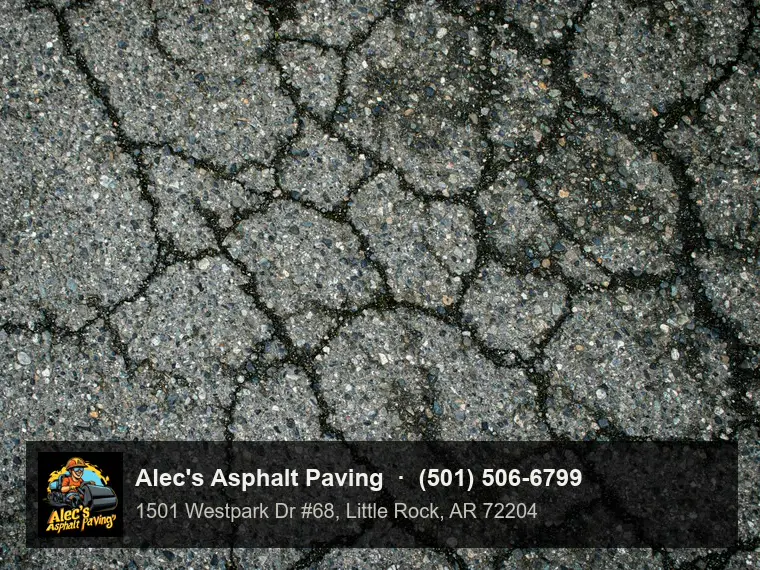
A new layer can't fix what it's sitting on. If the stone base under your asphalt pavement has gone soft or washed out, the old surface keeps flexing, and its cracks work their way up through the new asphalt along the same lines. Engineers call it reflective cracking, and it happens on any road surface laid over a failing base. You'd be paying for a fresh surface that shows the old one's damage.
These signs point below the surface:
- Alligator cracking
- A web of small, connected pieces. The base has quit carrying the load, so the asphalt bends until it breaks.
- Pothole
- A hole that goes through to the stone means water has been working on the base for a while.
- Sunken wheel tracks
- Grooves where the tires run. Something under them has compressed or shifted.
- Crumbling edges
- Pieces breaking off along the lawn or the ditch, because nothing solid is holding the edge up.
Finding one of these doesn't rule out resurfacing. A small failed area gets cut out and rebuilt as a full-depth patch (that's asphalt repair), and the overlay goes on over sound ground. When the failure runs across most of the surface, though, a new layer only hides it for a while. Then it's time to pave a new driveway or lot from the base up.
Seeing one of these? Call and tell us where it is. (501) 506-6799
What happens between the old surface and the new one
Steps 1 to 4 match the numbers on the drawing at the top of the page. Nearly all of this surface preparation happens before the paver shows up, and none of it can be seen once the new layer covers it. That's why it's the part of a resurfacing quote to read line by line.
Failed spots are rebuilt first
Any area where the base has given way is saw-cut, dug out, and rebuilt, and open cracks are cleaned and filled. Skip this, and the crack in the drawing is what comes back.
The edges are milled so the new surface meets flush
A new layer raises the surface. Where the drive meets the garage slab, the street, or a sidewalk, a milling machine grinds the old asphalt down in a taper first, so the finished surface lands level with what it meets.
Tack coat goes over all of it
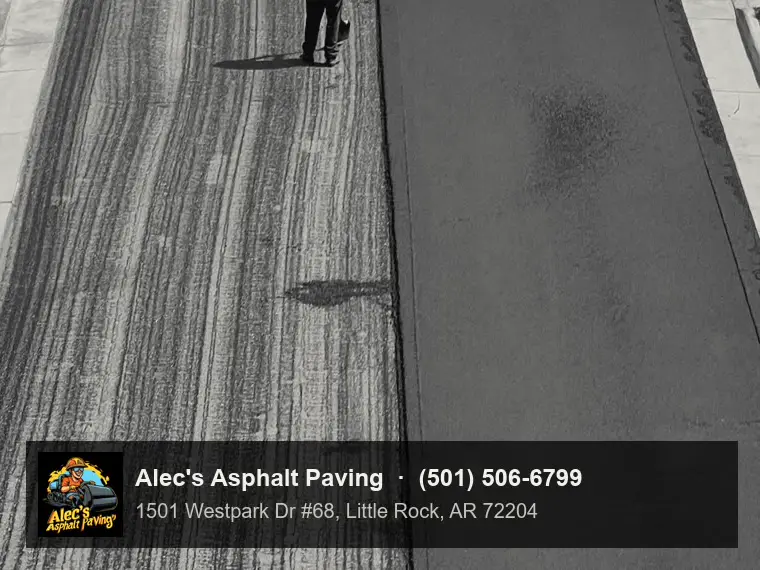
The old surface is swept clean and sprayed with tack coat, a thin film of liquid asphalt that glues the new layer to the old. Without a full, even coat, the two layers can separate where vehicles turn and brake. It should reach every edge, not just a few passes down the middle, and you're welcome to watch it go down.
New hot mix, rolled while it's hot
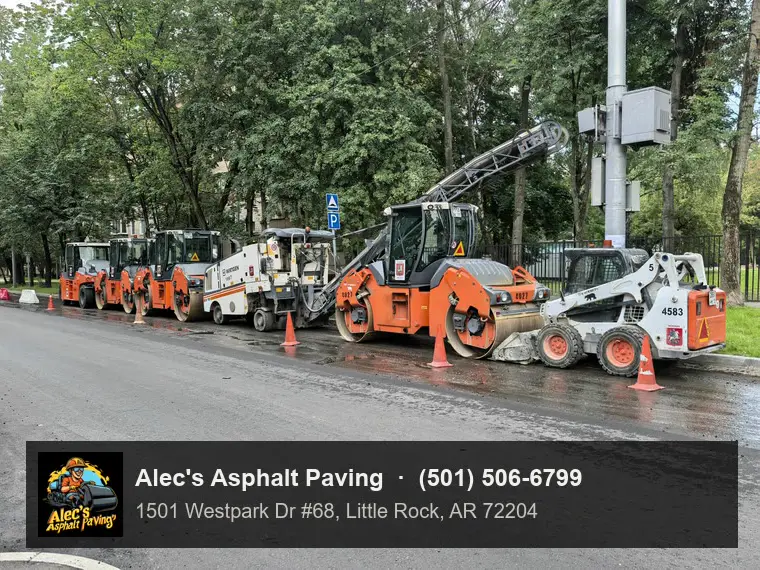
The paver spreads hot mix asphalt (asphalt concrete, on an engineer's drawing) over the tacked surface, and the roller compacts it before it cools. What's left is the thickness on your quote, measured after rolling.
Changes get agreed before they happen
Milling sometimes turns up a soft spot nobody could see from the top. When it does, the fix and what it adds to the price are agreed with you before the work goes ahead. Last comes cleanup: the site swept, and loose material hauled off before the crew leaves.
Want every one of those steps on your quote? Ask for it. (501) 506-6799
What asphalt resurfacing costs in Arkansas
General market ranges for Arkansas, not a quote. They give you a feel for where your written estimate should land.
| Work | General range |
|---|---|
| Overlay or resurfacing | $3–$9 per sq ft |
| Parking lot mill and overlay | $2–$6 per sq ft |
The final price depends on the job: its size, plus the four things below. The estimate is free and written. (501) 506-6799
What moves your number
- Repairs underneath. Each failed spot rebuilt before the overlay is its own line.
- How much gets milled. Tapering a few edges costs far less than grinding off a whole surface.
- Open cracks. A surface full of them takes longer to clean and fill.
- Getting equipment in. A paver and a roller need room. A tight gate or a steep, narrow drive slows everything down.
What customers say about the work
-
★★★★★
Our driveway was old but the base was still solid, so Alec suggested laying new asphalt over it instead of tearing everything out. That saved me real money, and he didn't try to upsell me. The crew was quick and it looks like a brand new driveway.
Amanda P.
-
★★★★★
We needed the private road into our subdivision repaved. Alec came out to look at it, gave us an honest price, and the crew finished in two days with minimal disruption to the neighbors. The road is smooth and drains properly now.
Steve A.
-
★★★★★
Our lot was cracked and full of low spots. They patched it, laid new asphalt over it, and striped it over a weekend so we didn't lose a single patient day. Communication was great, and the lot looks professional again.
Patricia S.
Resurfacing driveways and parking lots
Residential and commercial asphalt resurfacing jobs follow the same steps underneath, whether the call comes from a homeowner, a property manager, or a general contractor. What changes is the traffic it has to carry.
At a house, it's usually the asphalt driveway you walk across every day going gray and rough. An overlay gives you a dark, even surface again.
Parking lots for businesses, churches, and municipalities usually get a mill and overlay rather than a new layer stacked on top, so the curbs keep their height and the water still runs to the inlets. A certificate of insurance is available on request.
Managing a lot? Ask about a mill and overlay. (501) 506-6799
Asphalt services that often come before or after resurfacing
Asphalt Repair
Potholes, patches, and failed sections cut out and replaced.
Crack Sealing and Filling
Sealing cracks before water gets under the pavement.
Sealcoating
A protective coat that shields a sound surface from sun and water.
Line Striping
A new layer covers every line, so a resurfaced lot gets restriped: stalls, ADA-accessible spaces, arrows, and fire lanes.
Asphalt Paving
New asphalt from the ground up, for a surface too far gone to overlay.
Asphalt Maintenance
Parking lot maintenance on a cycle: crack sealing, patching, sealcoat, and restriping.
Where the water goes on the new surface
An overlay is a chance to fix how water leaves your pavement, as long as the water is only on top.
Shallow dips where puddles sit can be filled with a leveling pass before the final layer, so the finished surface falls toward the street, a ditch, or a drain and away from the house. Water that's already under the asphalt is a repair job, not a resurfacing one.
Height matters too. Each overlay sits on top of the last one, so a surface can only take so many before it's too high against the garage, the curbs, and the drains. Past that point, the old layers come off first.
Where we resurface
Alec's Asphalt Paving works from a yard in Little Rock, Arkansas. Here are a few of the towns we cover:
- Jacksonville
- Lonoke
- Malvern
- Mayflower
- North Little Rock
- Sheridan
- Sherwood
- White Hall
We work in every town in Arkansas. See all 109 towns
Wherever your drive is, the estimate is free. (501) 506-6799
Questions about asphalt resurfacing
How much does asphalt resurfacing cost in Little Rock?
It's priced by the square foot, and the price table above gives the Arkansas ranges. Your own number comes on a free written estimate.
Is resurfacing cheaper than replacing an asphalt driveway?
Usually, yes, and by a good margin. The old asphalt stays and does the work of a base, so there's no tear-out, no hauling, and much less new hot mix.
How long does an asphalt overlay last?
As long as the pavement under it lets it. Sound pavement underneath and the right thickness on top are what make it last. After that, keeping water out does the most: seal cracks as they open, and sealcoat the surface while it's sound.
How thick is an asphalt overlay?
It's set for each job and written on your quote in inches, compacted. Three things decide it: the traffic it has to carry (a pickup isn't a loaded delivery truck), the condition of the old surface, and how much height the edges can take.
What's the difference between resurfacing and sealcoating?
Sealcoating is a coat. Resurfacing is new asphalt. Sealcoat is a thin liquid layer that shields a sound surface from sun and water; it adds no strength and won't smooth out a rough one. An overlay is new hot mix with a thickness of its own. If your drive is faded but still smooth, sealcoating may be all it needs.
Can I resurface my asphalt driveway myself?
Not the way a paving contractor means it. The "resurfacer" sold in pails at the hardware store is a thick sealer: a coating, not a new layer. A real overlay takes hot mix, a paver, and a roller. Filling small cracks and sealing a sound drive are fair weekend jobs, though.
Tell us what your asphalt is doing.
Fading, cracking, holding puddles, crumbling at the edges. Tell us what you're seeing and about how big the area is. Your free written estimate states the thickness of the new layer in inches, compacted.
Call (501) 506-6799Available 24/7. Press 1 and you'll reach a person.
Ask about the warranty on your job when you call. It depends on the work.